
Millions of Dollars
Recovered for Our Clients.
Recovered for Our Clients.
Let Us Fight for the Money You Deserve!











A collision between a bicycle and a motor vehicle can cause devastating injuries even at relatively low speeds. Unlike occupants of cars and trucks, bicyclists have little protection from the force of an impact. A cyclist may be thrown onto the roadway, into another vehicle, or against a curb or other object.
The Florida bicycle accident lawyers at the Law Offices of Jason Turchin have handled hundreds of bicycle accident claims, including cases involving bicyclists struck by cars and other motor vehicles. We represent injured cyclists throughout Florida, including Miami, Fort Lauderdale, Orlando, Tampa, West Palm Beach, Naples, the Florida Keys, and surrounding communities.
If you or a loved one was seriously injured while riding a bicycle, call 800-337-7755 or chat with our live agents for a free consultation.
Florida’s weather allows people to bicycle throughout much of the year, whether for transportation, exercise, recreation, or work. Unfortunately, Florida also continues to experience a significant number of fatal bicycle crashes.
According to preliminary Florida Department of Highway Safety and Motor Vehicles data, 207 bicyclists were killed in Florida traffic crashes in 2024. A bicycle accident does not have to be fatal to permanently change someone’s life. Cyclists struck by motor vehicles can suffer brain injuries, fractures, spinal injuries, internal injuries, severe road rash, and other significant trauma.
A bicycle accident can happen in seconds. Determining why it happened may require examination of the roadway, vehicles, traffic controls, video footage, witness statements, and the actions of both the driver and cyclist.
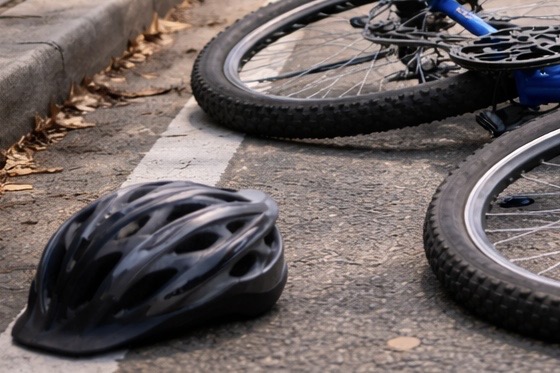
Common bicycle crash scenarios may include:
Some crashes happen because a driver says that he or she “never saw” the cyclist. Whether a driver actually noticed a bicycle does not necessarily determine negligence. Drivers have obligations to operate their vehicles with reasonable care and comply with Florida traffic laws.
Florida law generally provides a person operating a bicycle with the rights and duties applicable to drivers of other vehicles, subject to bicycle-specific rules and laws that by their nature do not apply to bicycles.
This is important after an accident because a cyclist is not automatically responsible simply because a bicycle was sharing the roadway with motor vehicles.
Florida law also contains specific rules concerning where cyclists may ride. When traveling slower than the normal speed of traffic, a cyclist generally must use a bicycle lane when one is provided or, if there is no bicycle lane, ride as close as practicable to the right-hand curb or edge of the roadway. There are important exceptions, including when passing, preparing for a left turn, or avoiding unsafe conditions, parked vehicles, surface hazards, turn lanes, pedestrians, or lanes that are too narrow for a bicycle and vehicle to safely travel side by side.
Yes. Florida law generally requires a motor vehicle overtaking a bicycle in the same travel lane to pass at a safe distance of at least three feet. If the driver cannot safely provide that distance, the driver generally must remain behind the bicycle until it is safe to pass.
The three-foot passing requirement also generally applies when a motor vehicle passes a cyclist occupying a bicycle lane, subject to statutory exceptions such as separated bicycle lanes.
A close-passing crash can cause direct contact between the vehicle and cyclist or force a cyclist off the roadway. Evidence concerning the vehicle’s position, roadway dimensions, video footage, damage, and witness observations may become important in determining how the collision occurred.
Florida law generally requires a bicycle rider or passenger under 16 years old to wear a properly fitted and securely fastened bicycle helmet meeting applicable federal safety standards.
Florida does not impose that same statutory bicycle helmet requirement on every adult cyclist.
The absence of a helmet also does not automatically determine who caused a bicycle accident. Liability for the collision and issues concerning the nature or extent of particular injuries can involve separate factual and legal questions.
Your health should come first. Bicycle accidents can cause significant injuries, and symptoms of some injuries may not be immediately obvious.
When circumstances permit, consider taking the following steps:
Video can disappear quickly. Businesses and private surveillance systems may overwrite recordings, so serious bicycle crashes should be investigated promptly.
Insurance after a bicycle accident can be more complicated than many cyclists expect.
Depending on the circumstances, Florida Personal Injury Protection insurance may potentially provide benefits when a bicyclist is struck by a motor vehicle. The analysis can depend on whether the cyclist owns an insured vehicle, resides with certain insured relatives, and other circumstances.
Other potential sources of compensation or medical bill payment may include the at-fault driver’s bodily injury liability coverage, health insurance, uninsured or underinsured motorist coverage, and other applicable policies.
Our Florida car accident lawyers can investigate available insurance coverage after a bicycle-versus-vehicle collision.
This is an important issue in Florida because not every driver necessarily carries bodily injury liability insurance.
If the responsible driver has no bodily injury coverage or does not have enough insurance to compensate an injured cyclist, uninsured or underinsured motorist coverage may become important.
Depending on the facts, an attorney may investigate insurance policies associated with the cyclist, household members, involved vehicles, employers, and other potentially responsible parties.
Hit-and-run bicycle crashes can present both investigative and insurance issues. If possible, try to remember anything about the vehicle, including its make, model, color, license plate, direction of travel, or distinguishing features.
Surveillance footage, dashcam video, witnesses, vehicle debris, nearby businesses, and law enforcement investigation may potentially help identify the vehicle.
If the driver cannot be identified, applicable uninsured motorist coverage may potentially become an important source of compensation.
A “dooring” accident can occur when someone in a parked vehicle opens a door into the path of an approaching cyclist. The cyclist may strike the door directly or swerve into traffic while trying to avoid it.
These accidents can result in serious head injuries, fractures, facial trauma, and other injuries. Photographs of the vehicle and roadway, witness information, and nearby video can be important evidence.
Intersections are particularly important locations in bicycle accident investigations.
A driver may begin a right turn and cross the path of a cyclist traveling beside the vehicle. A left-turning driver may cross directly in front of an approaching cyclist. Other collisions involve stop signs, red lights, driveways, crosswalks, and vehicles entering or leaving parking lots.
Determining fault may require evaluating right-of-way rules, traffic signals, vehicle positions, sight lines, speed, video, and witness testimony.
Because cyclists have little physical protection from a motor vehicle, bicycle crashes can cause serious injuries including:
Some bicycle crashes unfortunately result in fatal injuries. When a cyclist is killed because of another person’s alleged negligence, surviving family members and the estate may have rights under Florida’s wrongful death laws.
A bicycle accident claim based on negligence generally involves determining whether another person owed a duty of reasonable care, breached an applicable duty, and caused injuries and damages as a result.
Evidence used to investigate fault may include:
A traffic citation or a driver’s statement at the scene can be relevant, but neither necessarily determines civil liability by itself.
Drivers are not automatically responsible for every bicycle accident. Cyclists also have responsibilities under Florida traffic law.
Florida uses modified comparative negligence for many negligence claims. For covered claims, a person found to be more than 50 percent responsible for his or her own harm generally cannot recover damages. When an injured cyclist is 50 percent or less at fault, damages may generally be reduced according to the percentage of fault attributed to the cyclist.
Comparative fault disputes can make evidence about how the crash occurred especially important.
For many Florida negligence claims arising from bicycle accidents occurring on or after March 24, 2023, the statute of limitations is generally two years. Different rules may apply to older accidents, wrongful death cases, governmental defendants, and other particular circumstances.
You should not wait until a legal deadline approaches before investigating a serious bicycle accident. Video footage, witnesses, physical evidence, and vehicle data may disappear much sooner.
When another party is legally responsible, potential damages may depend on the injuries, insurance coverage, fault, and other circumstances. Recoverable damages could include:
There is no standard settlement value for a Florida bicycle accident. A case involving surgery, permanent brain injury, significant fractures, or permanent disability may involve very different damages from an accident involving temporary injuries.
Attorney Jason Turchin and his firm have handled hundreds of bicycle accident claims and have more than 20 years of experience representing accident and injury victims.
Jason’s professional recognition includes:
Learn more about Jason Turchin, review our prior verdicts and settlements, or read our client reviews. Additional information is available through our motor vehicle accident practice.
Potentially. A cyclist may have a claim when evidence supports a legal basis for holding the driver or another party responsible for causing the collision and resulting injuries.
Florida law generally gives a person operating a bicycle the rights and duties applicable to drivers of other vehicles, subject to bicycle-specific rules and laws that cannot reasonably apply to bicycles.
Florida law generally restricts motor vehicles from driving on bicycle paths and regulates interactions between motor vehicles and bicycle lanes. The legality of a particular maneuver can depend on the type of bicycle facility, roadway markings, turns, driveways, and other circumstances.
Florida law generally requires a driver overtaking a bicycle in the same travel lane or an ordinary bicycle lane to provide a safe passing distance of at least three feet, subject to statutory provisions and exceptions.
Potentially. Florida’s statutory bicycle helmet requirement generally applies to riders and passengers under 16. Whether the absence of a helmet has any legal relevance to an adult cyclist’s particular injuries is different from determining who caused the collision and should be evaluated based on the facts.
Potentially. A bicycle lane does not eliminate a driver’s duty to operate a vehicle carefully. These accidents frequently require investigation of vehicle movements, turns, lane markings, right-of-way, passing distance, and visibility.
Potentially. Liability depends on the circumstances, including where the collision occurred, local regulations, the actions of the cyclist and driver, and applicable Florida law. Sidewalk bicycle accidents frequently occur at driveways and intersections where vehicles cross a cyclist’s path.
A parent or guardian may potentially pursue a claim on behalf of an injured minor. Claims involving children can raise additional issues concerning medical expenses, settlement approval, and the child’s future damages.
Our bicycle accident cases are handled on a contingency fee basis. There are no fees or costs owed to our firm unless there is a recovery.
If you or a loved one was seriously injured while riding a bicycle in Florida, the Law Offices of Jason Turchin can review how the collision occurred, available insurance coverage, your injuries, and potential sources of compensation.
Call 800-337-7755 or chat with our live agents for a free consultation. We can represent injured cyclists in Miami, Fort Lauderdale, Orlando, Tampa, West Palm Beach, Naples, the Florida Keys, and throughout Florida.
All bicycle accident cases are handled on a contingency fee basis, meaning there are no fees or costs owed to our firm unless there is a recovery.
