- Contact Us Now: (800) 337-7755 Tap Here to Call Us












When a Lithium-Ion Battery Fails in Florida, Who Pays for the Harm?


If a phone, e-bike, power tool, vape or other device with a lithium-ion battery caught fire or exploded and hurt you or a loved one in Florida, you may have a lithium-ion battery product liability claim against the manufacturer, distributor or seller. Compensation may cover medical bills, lost income, property damage and pain. Call 800-337-7755 to talk with our team.
Lithium-ion batteries power much of daily life. They charge overnight on nightstands, ride under scooter decks along Florida bike paths and sit in garages next to lawn equipment and power tools. Most of the time they work as intended. When a battery is poorly designed, cheaply built or sold without clear warnings, though, it can fail suddenly and with real force. A fire that starts in a small battery pack can spread through a bedroom, a car or an apartment building in minutes.
Why Lithium-Ion Batteries Can Be So Dangerous
A lithium-ion cell stores a large amount of energy in a small space. If something goes wrong inside the cell, such as a manufacturing flaw, physical damage or overcharging, it can enter what engineers call thermal runaway. The cell heats itself, then heats the cells around it, and the reaction can lead to intense flames, toxic smoke or an explosion. These fires can be hard to put out and may reignite after they seem to be over.
Fire officials around the country continue to warn consumers about charging habits. A KMVT report on Fire Prevention Week described fire officials urging people to use caution when charging lithium-ion batteries. Safe habits matter, but many fires are not the user’s fault at all. A defective battery or charger can fail even when it is used exactly as the instructions describe.
Florida adds its own risk factors. Long stretches of heat, batteries left in hot cars and garages, high humidity and flooding after storms may all put extra stress on battery packs. Products should be designed with the conditions they will actually face in mind.
Products Commonly Involved in Battery Fire Claims
- E-bikes and e-scooters. Large battery packs and aftermarket chargers are frequent concerns. Learn more about e-bike and e-scooter battery fire lawsuits.
- Cordless power tools. Drills, saws and yard equipment may use high-capacity packs. See our page on power tool battery explosion lawsuits.
- Wearable heated products. Batteries placed close to the skin, such as in heated insoles, can cause serious burns. Read about Florida heated insole burn injury lawsuits.
- Phones, laptops and tablets. Swollen or overheating batteries may be warning signs of a defect.
- Vapes and e-cigarettes. Devices carried in pockets can cause burns to the legs, hands and face.
- Hoverboards, toys and power banks. Low-cost imports may skip important safety features.
How Florida Product Liability Law May Apply
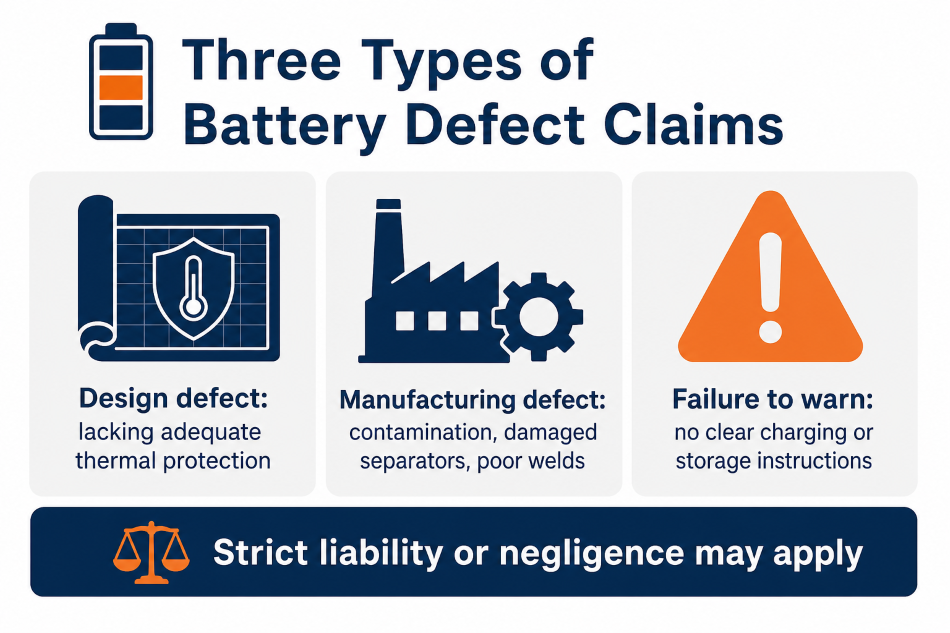
Florida law generally allows injured people to bring product liability claims based on strict liability, negligence or both. Under strict liability, the focus is usually on whether the product was defective and unreasonably dangerous, rather than on whether the company was careless. Claims often fall into three categories.
- Design defect. The battery or device may have been unsafe by design, for example lacking adequate thermal protection or a reliable battery management system.
- Manufacturing defect. A particular battery may have left the factory with contamination, damaged separators or poor welds that other units did not have.
- Failure to warn. The company may not have given clear instructions about charging, storage, heat exposure or signs of battery failure.
More than one party may share responsibility. Depending on the facts, a claim may involve the battery cell maker, the company that assembled the device, the maker of the charger, an importer or distributor, or the retailer or online seller. When products come from overseas, identifying the right companies can take careful investigation.
Examples of Lithium-Ion Battery Cases
The scenarios below are illustrations of the kinds of situations that may support a claim. They are not actual clients or case results.
- E-bike charging fire. A Broward County family charges an e-bike in the garage overnight. The battery ignites, the fire spreads into the home, and a family member suffers smoke inhalation and burns. Investigators may look at the battery pack, the charger and whether warnings were adequate.
- Pocket vape explosion. A man in Miami-Dade carries a vape in his pants pocket when the battery bursts, leaving deep burns on his thigh that may require skin grafts.
- Power tool pack failure. A contractor on a job site in Palm Beach County snaps a battery onto a cordless saw, and the pack overheats and explodes, injuring his hand and eyes.
- Heated insole burn. An older adult with reduced feeling in the feet wears battery-heated insoles and suffers burns that are not noticed until the damage is serious.
- Apartment fire from a scooter. A scooter battery fails in one unit, and neighbors in the building are hurt or lose property, raising questions about the product and possibly others involved.
Injuries and Losses These Fires Can Cause
Battery fires and explosions can cause second and third degree burns, smoke inhalation, chemical injuries, eye damage, scarring and disfigurement, and in the worst cases, wrongful death. Recovery can involve hospital stays, burn unit care, surgery and long periods away from work. You can read more about common injuries from lithium-ion battery fires and explosions. In a Florida product liability case, damages may include medical expenses, future care, lost wages, property damage, pain and suffering, and emotional distress.
Steps to Take After a Battery Fire or Explosion
- Get medical care first. Burns and smoke injuries can worsen over time.
- Keep the product if safe. Do not throw away the battery, charger, device or packaging. Store remains away from anything flammable.
- Document everything. Take photos of the scene, injuries and damaged property, and save receipts, order confirmations and fire department reports.
- Avoid giving the product away. Manufacturers or insurers may ask for the device. Speak with a lawyer before handing it over.
- Talk to a lawyer promptly. Evidence and deadlines matter.
For more detail, see our guide on what to do if a lithium-ion battery explodes in your home.
Why Choose the Law Offices of Jason Turchin
The Law Offices of Jason Turchin is based in Florida, and handles personal injury cases in Florida, New York, New Jersey and Washington, D.C., and throughout the U.S. with a network of co-counsels and local counsels. That reach can matter in battery cases, where the companies behind a product may be located far from where the fire happened.
Attorney Jason Turchin has an Avvo 10.0 Superb Rating and was AV Preeminent Peer Rated for Highest Level of Professional Excellence by Martindale-Hubbell in 2026. He has been named to the Super Lawyers list from 2020 through 2026, and the firm has held an A+ BBB rating annually from 2014 through 2026. He is also a #1 Best Selling Author on Amazon.com on Accident Law.
Cases are handled on a contingency fee basis, with fees and costs waived if there is no recovery. You can focus on healing while our experienced team investigates the product and the companies behind it.
Frequently Asked Questions
Can I file a claim if I bought the product online?
Possibly. Online purchases may still lead to claims against the manufacturer, importer or seller. Keep your order history and any listing information you can find.
What if I was charging the battery with a different charger?
Using another charger does not automatically end a claim. Florida follows a comparative fault system, and the details of how the fire started may affect who is responsible and how much may be recovered.
How long do I have to file in Florida?
Florida law sets deadlines for injury and product liability claims, and for many injury claims the window may be as short as two years. Because deadlines can vary, it is wise to speak with a lawyer soon. Our post on how to file a lithium-ion battery fire lawsuit explains the process.
Does there need to be a recall for me to have a case?
No. A recall may help show a known problem, but many defective products are never recalled. A claim can be based on the evidence of a defect in your specific product.
Talk With a Florida Battery Fire Injury Lawyer
A lithium-ion battery fire can change a family’s life in seconds. If you or someone you love was hurt by a battery that overheated, caught fire or exploded, you may have legal options. Call 800-337-7755 or contact us online to discuss your situation with the Law Offices of Jason Turchin.
