- Contact Us Now: (800) 337-7755 Tap Here to Call Us












Were You Hurt by a Recalled Tire or a Tread Separation?


A tire recall lawsuit may be an option for people injured when a recalled tire, including one covered by NHTSA recall 26T015, fails through tread separation, a blowout or sudden air loss. Drivers, passengers, other motorists and families of people killed may be able to seek compensation from the tire maker, distributor or seller, depending on the facts.
If a tire failure changed your life or a loved one’s, call the Law Offices of Jason Turchin at 800-337-7755 for a free case review. You can also reach us through our online contact form.
Tire Recall Lawsuits at a Glance
| Question | Short answer |
|---|---|
| Where can I read recall 26T015? | The official notice is posted on the NHTSA recalls website under campaign number 26T015. |
| Do I need a recall to file a claim? | No. A recall can support a claim, but injury claims for defective tires may also be possible without one. |
| Who may be responsible? | Possibly the tire manufacturer, a distributor, a retailer, an installer or another driver, depending on what caused the crash. |
| Should I keep the tire? | Yes, if you can. The failed tire is often the most important piece of evidence in the case. |
| Is there a deadline in Florida? | Yes. Florida sets time limits for injury and wrongful death claims, and some may be as short as two years. |
| What does it cost to talk to a lawyer? | Our firm offers a free consultation and handles cases on a contingency fee basis. |
What Is NHTSA Recall 26T015?
NHTSA recall 26T015 is a tire recall posted by the National Highway Traffic Safety Administration, and the official notice explains which tires are affected and why. The “T” in the campaign number marks it as a tire recall rather than a vehicle or equipment recall.
You can review the full notice, including the brand, the tire lines and sizes involved, the production period and the remedy being offered, on the NHTSA recall page for 26T015. We encourage anyone who thinks they have one of these tires to read the notice directly instead of relying on summaries, because the details matter. Tire recalls often apply only to certain sizes or tires built at a particular plant during a specific window of time.
A recall is a public acknowledgment that a safety problem exists, or that a tire does not meet federal safety standards. For someone already hurt, that acknowledgment can be meaningful. It may help show that the problem was not caused by the driver and that the company knew, or should have known, about the risk.
What Is Tire Tread Separation and Why Is It So Dangerous?
Tread separation happens when the tread and steel belts of a tire peel away from the rest of the tire, often at highway speed. When it happens, a driver can lose steering control in seconds, which may lead to rollovers, lane departures and multi-vehicle crashes.
Modern radial tires are built in layers that are bonded together during manufacturing. If the rubber compound is flawed, the bond between layers is weak, moisture or debris is trapped inside, or the belts are not properly placed, the layers can begin to separate over time. Heat speeds this up, which is one reason tire failures are a real concern on Florida roads, where long stretches of interstate driving and high summer temperatures are part of daily life.
Common signs that a tire may be separating include a bulge or bubble on the tread or sidewall, unusual vibration, a thumping noise that grows with speed, or uneven wear. In many tread separation cases, though, there is little or no warning before the failure. Our page on tire tread separation lawsuits in Florida goes into more detail on how these failures are investigated.
The stakes on Florida roads are high. According to the Florida Department of Highway Safety and Motor Vehicles, over 238,000 people were injured in automobile accidents in Florida in 2025, and an estimated 2,995 people died in crashes in Florida in 2025. Not every one of those crashes involved a tire, but a sudden tire failure is the kind of event that can turn routine driving into a serious collision.
Who Can File a Tire Recall Lawsuit?
Anyone injured because a defective or recalled tire failed may be able to file a claim, and that is not limited to the owner of the vehicle. Families who lost a loved one in a tire-related crash may also be able to bring a wrongful death claim.
People who may have a claim include:
- The driver of the vehicle whose tire failed, even if they own the car.
- Passengers in that vehicle, including children and rideshare passengers.
- Occupants of other vehicles struck when the driver lost control.
- Pedestrians, cyclists and motorcyclists hit by a vehicle after a tire failure.
- Surviving family members of someone killed in a tire-related crash.
Who May Be Held Responsible for a Defective Tire?
Responsibility for a tire failure may fall on more than one party, including the company that designed or built the tire and the businesses that sold, stored or installed it. The right defendants depend on what caused the tire to fail.
Product liability claims in Florida can be based on several theories. A manufacturing defect claim may apply when a particular batch of tires was built incorrectly. A design defect claim may apply when the tire’s design itself is unreasonably dangerous. A failure to warn claim may apply when a company did not adequately tell consumers about a known risk. Negligence claims may also apply, for example against a shop that installed a recalled tire after the recall was announced or failed to tell a customer about it.
Tire defects are one type of automotive product claim we review. Readers dealing with other vehicle safety issues may find our articles on Chrysler recall injury claims and airbag deployment lawsuits helpful.
Does My Tire Have to Be Recalled for Me to Have a Case?
No. A tire does not have to appear on a recall list for an injured person to have a product liability claim, although a recall can make certain parts of a case easier to prove. Many defective products cause injuries before a recall is ever issued, and some are never recalled at all.
| Recalled tire claims | Non-recalled tire claims |
|---|---|
| The recall notice may help show a known safety defect. | The defect usually has to be shown through inspection and engineering analysis. |
| Recall timing may show when the company learned of the problem. | Evidence of what the company knew may come from records gathered during the case. |
| Retailers who sold or installed tires after the recall may share responsibility. | Responsibility may depend on how the tire was designed, built, stored or serviced. |
| The tire still has to be matched to the recall by brand, size and production code. | The failed tire is still key evidence and should be preserved. |
What Should I Do After a Tire Failure Crash?
After getting medical care, the most important step is usually to preserve the tire and the vehicle so the cause of the failure can be examined. Tire companies often argue that a failure came from road hazards, underinflation or poor maintenance, and the physical evidence may be the best way to respond.
- Get medical attention right away, even if your injuries seem minor at first.
- Call law enforcement so an official crash report is made.
- Photograph the tire, the wheel, the vehicle, the road and any tread debris at the scene.
- Tell the towing company, body shop and your insurer not to discard or destroy the tire or vehicle.
- Do not return the tire to the manufacturer or a dealer for “inspection” before speaking with a lawyer.
- Compare your tire to the NHTSA notice and contact a product liability lawyer for guidance.
What Information Helps a Tread Separation Claim?
Records showing where the tire came from and how it was cared for can help a lawyer evaluate a tread separation claim. Gather what you can, but do not let missing paperwork stop you from asking about your options.
- The tire itself, along with the wheel if possible.
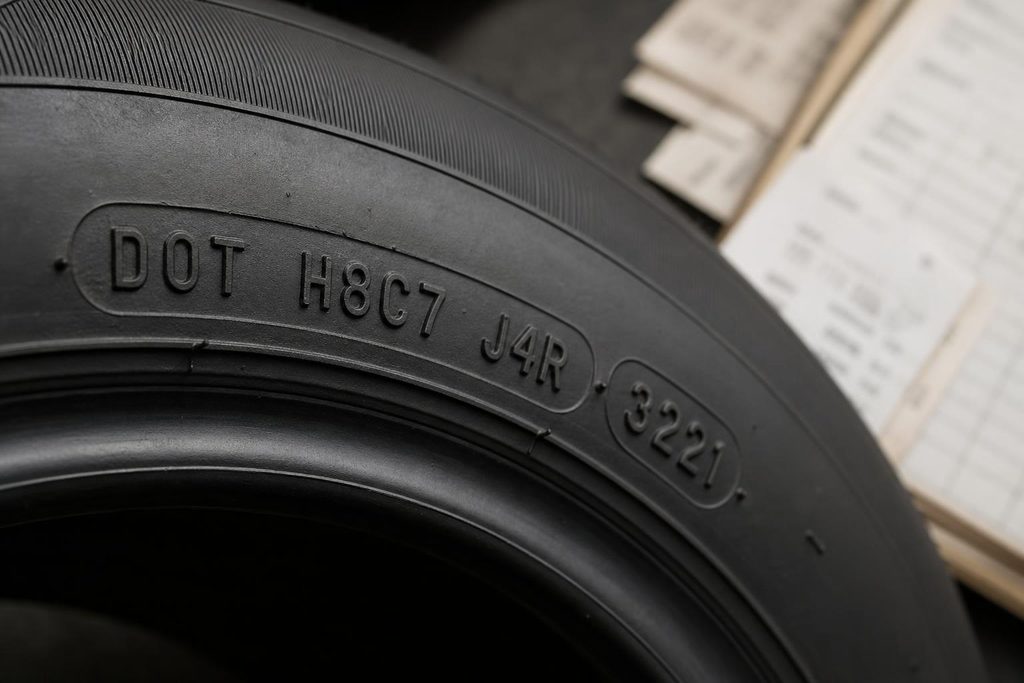
- The tire identification number printed on the sidewall after the letters DOT.
- Purchase and installation receipts from the tire shop or dealer.
- Maintenance records, including rotations and alignments.
- Any recall letters you received about your tires.
- Medical records and bills related to your injuries.
- The crash report and contact details for any witnesses.
Examples of Situations That May Lead to a Tire Claim
The scenarios below are hypothetical examples meant to show how tire claims can arise. They are not actual clients or case results, and every case depends on its own facts.
- Highway rollover after separation: A Broward County commuter is driving on the interstate when the tread on a rear tire peels away. The SUV rolls, and the driver suffers spinal injuries. A later inspection suggests a bonding problem between the belts, and the tire’s production code matches a recall.
- Passenger injured in a family car: A teenager riding with a parent is hurt when a front tire blows out and the car strikes a guardrail. Even though the parent was driving, the passenger may have a claim against the tire maker.
- Recalled tire sold after the recall: A Weston man buys discounted tires from a shop months after a recall is announced. One fails, causing a crash. The shop’s decision to sell recalled inventory may become part of the claim.
- Another driver’s tire fails: A motorcyclist is struck by a pickup truck that swerved across lanes after its tire came apart. The motorcyclist may be able to pursue both the truck driver’s insurance and the tire manufacturer.
- Wrongful death claim: A family loses a loved one in a tire failure crash. Surviving family members may be able to bring a wrongful death claim if the tire is shown to be defective.
How Long Do I Have to File a Tire Recall Lawsuit in Florida?
Florida sets deadlines for filing injury and wrongful death claims, and some can be as short as two years from the date of the crash. Because different claims may carry different deadlines, it is wise to speak with a lawyer as soon as possible.
Filing deadlines are set out in Florida Statute §95.11, and the time limit that applies can depend on whether a claim is based on negligence, product liability or a wrongful death. Florida also has a statute of repose for some product claims that may limit how long after a product was sold a lawsuit can be filed. Missing a deadline can end a claim before it starts.
Fault rules could matter too. Under Florida Statute §768.81, Florida uses a modified comparative fault system. In general negligence cases, an injured person found more than 50 percent at fault may not be able to recover damages, and recovery may be reduced by their share of fault. Tire companies sometimes try to shift blame to drivers, so careful investigation can be important.
What Compensation May Be Available?
People hurt by defective tires may be able to seek compensation for medical bills, lost income and pain and suffering, among other losses. The value of any claim depends on the injuries, the evidence and the parties involved.
Depending on the case, damages may include past and future medical care, rehabilitation, lost wages, reduced earning ability, property damage, pain and suffering, and loss of enjoyment of life. In wrongful death claims, families may be able to seek damages such as funeral expenses and the loss of support and companionship. For broader answers about defective and recalled products, visit our product liability FAQs.
Why Choose the Law Offices of Jason Turchin
Attorney Jason Turchin is the founder and principal attorney of the Law Offices of Jason Turchin, a personal injury firm based in Florida. He and his team are experienced in reviewing recall and defective product claims, including automotive cases involving tire failures.
- Recognized by peers and clients: Attorney Jason Turchin holds an Avvo 10.0 Superb Rating and was AV Preeminent Peer Rated for Highest Level of Professional Excellence by Martindale-Hubbell in 2026.
- Consistent recognition: He has been named to the Super Lawyers list from 2020 through 2026 and to America’s Top 100 Personal Injury Attorneys® list in 2026.
- Reach beyond South Florida: The firm handles personal injury cases in Florida, New York, New Jersey and Washington, D.C., and throughout the U.S. with a network of co-counsels and local counsels.
- No upfront fees: Cases are handled on a contingency fee basis, with fees and costs waived if there is no recovery.
You can learn more about Attorney Jason Turchin and his background on our site.
Frequently Asked Questions About Tire Recall Lawsuits
How do I know if my tire is part of recall 26T015?
Compare the brand, tire line, size and the tire identification number on your sidewall with the details in the NHTSA notice. Tire recalls often cover only specific production dates or plants, so the code matters.
My tire was replaced under the recall. Can I still file a claim?
Getting a recall replacement does not necessarily waive an injury claim if you were already hurt by the original tire. A lawyer can review any paperwork you signed.
What if the tire was thrown away after the crash?
A claim may still be possible using photos, purchase records, crash reports and witness accounts, although missing evidence can make a case harder. Let a lawyer know right away so remaining evidence can be preserved.
Can I sue if I bought used tires?
Possibly. Claims involving used tires can still be pursued against the manufacturer, and in some situations against the seller, depending on the tire’s history and condition.
Will the tire company say I caused the failure?
Tire companies often point to underinflation, punctures or poor maintenance. Independent inspection of the tire may help show whether a defect played a role.
Do tire recall cases go to trial?
Many injury claims resolve without a trial, but some do go to court. Every case is different, and no lawyer can promise a particular outcome.
Talk to a Product Liability Lawyer About Your Tire Failure
If you or someone you love was hurt in a crash involving a recalled tire or a tread separation, you may have legal options, and Florida deadlines may apply. The Law Offices of Jason Turchin can review what happened, explain your rights and help you decide on next steps. Call 800-337-7755 today for a free consultation, or contact us online. There are no fees or costs unless there is a recovery.
