- Contact Us Now: (800) 337-7755 Tap Here to Call Us












4 in 1 Carbon Monoxide Detector Injury Lawsuit


CPSC Warns Consumers to Stop Using KH158 Natural Gas and Carbon Monoxide Detectors
Carbon monoxide detectors are designed to provide an early warning when dangerous concentrations of carbon monoxide develop inside a home. Because carbon monoxide is colorless and odorless, consumers may have no other indication that they are being exposed to a potentially deadly gas.
However, the U.S. Consumer Product Safety Commission is warning consumers to immediately stop using certain 4 in 1 Plug In Natural Gas and Carbon Monoxide Detectors, Model KH158, because the devices can fail to alert consumers to hazardous carbon monoxide.
The CPSC issued its warning on August 20, 2026, covering approximately 376,974 detectors sold under numerous brand names. The agency says it is aware of 91 reports of the detectors failing to alarm in the presence of gas and/or carbon monoxide leaks.
The manufacturer, Shenzhen Kanghua Shengshi Industrial Co., Ltd., doing business as KH Alert, has not agreed to recall the products. The CPSC therefore advises consumers to stop using and dispose of the detectors immediately and replace them with working carbon monoxide alarms.
If you or a loved one suffered carbon monoxide poisoning, neurological injuries, brain damage, or death after a carbon monoxide detector allegedly failed to provide a warning, the Law Offices of Jason Turchin may be able to help evaluate a potential product liability or wrongful death claim.
Why Is the CPSC Warning Consumers About These Carbon Monoxide Detectors?
According to the CPSC, Model KH158 combination natural gas and carbon monoxide detectors may fail to alert consumers to the presence of hazardous carbon monoxide.
A carbon monoxide detector serves a critical safety purpose because occupants generally cannot see or smell CO.
If a detector fails to sound, residents may continue breathing carbon monoxide without realizing that a dangerous condition exists.
Potential consequences may include:
- Headaches
- Dizziness
- Nausea
- Confusion
- Loss of consciousness
- Brain injury
- Cardiac complications
- Permanent neurological damage
- Death
A failed alarm may be especially dangerous while residents are sleeping.
91 Detector Failures Reported
The CPSC says it is aware of 91 reports involving the affected detectors failing to alarm in the presence of gas and/or carbon monoxide leaks.
That number is particularly significant because consumers purchase these products specifically to warn them when dangerous gas levels develop.
A detector that appears to be functioning but does not sound during a real hazard may create a false sense of security.
Which Carbon Monoxide Detectors Are Affected?
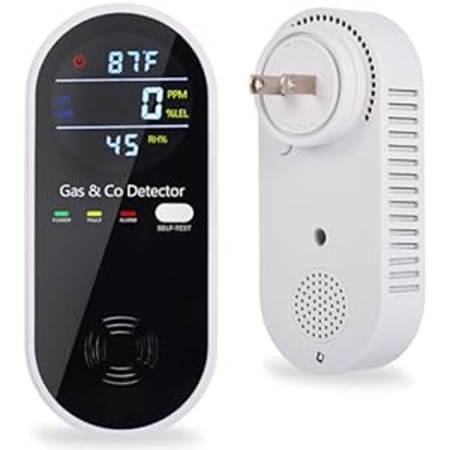
The CPSC warning applies to 4 in 1 Plug In Natural Gas and Carbon Monoxide Detectors, Model KH158.
The products were sold under numerous brand names, including:
- ARIKON
- ELECOIN
- FLUNGSKY
- HAOKESITE
- Hembisen
- JNHCD
- KAKIMENT
- KH Alert
- KOABBIT
- NICGOL
- NORJAN
- OUMEBIU
- Sooguard
- Vilfet
- Vzmcov
- WESHLGD
- XLA Alert
- YOJOCK
The detectors are made of white, gray, or black plastic and feature a digital display. A “SELF-TEST” button appears on the front, along with green, yellow, and red indicator lights labeled POWER, FAULT, and ALARM.
How Many Detectors Were Sold?
Approximately 376,974 units are covered by the CPSC warning.
Because the detectors were sold under many different brand names, consumers should check the model number rather than relying only on the brand printed on the packaging.
Where Were the KH158 Detectors Sold?
According to the CPSC, the detectors were sold online through:
- Amazon.com
- eBay.com
- AliExpress
- Microcenter.com
- Snapklik.com
They were sold individually and in multipacks from approximately June 2024 through July 2026 for between $13 and $140.
Who Manufactured the Detectors?
The CPSC identifies the manufacturer as:
Shenzhen Kanghua Shengshi Industrial Co., Ltd., doing business as KH Alert, of China.
The detectors were manufactured in China.
Is There a Recall?
Technically, the August 20, 2026 announcement is a CPSC product safety warning rather than an agreed recall.
The CPSC states that the manufacturer has not agreed to recall these detectors.
Nevertheless, the agency’s instructions are clear:
- Do not purchase the products.
- Do not sell them.
- Stop using them.
- Dispose of them immediately.
- Install new, working carbon monoxide detectors.
Consumers should not continue relying on the affected detector simply because an agreed recall remedy has not been established.
What Should Consumers Do With the Affected CO Detectors?
The CPSC advises consumers to immediately stop using the affected detectors and replace them with working carbon monoxide alarms.
The agency recommends installing CO detectors:
- On each level of the home
- Outside separate sleeping areas
Carbon monoxide detectors should be battery operated or have battery backup.
The CPSC also recommends testing detectors frequently and purchasing models that meet the UL 2034 safety standard.
Why Is Carbon Monoxide So Dangerous?
Carbon monoxide is sometimes called a “silent killer” because people generally cannot detect it through sight or smell.
CO can be produced by fuel-burning appliances and equipment, including:
- Furnaces
- Boilers
- Gas water heaters
- Gas stoves
- Fireplaces
- Generators
- Vehicles
- Other combustion equipment
When carbon monoxide accumulates inside an enclosed space, people may breathe it without realizing they are being exposed.
How Does Carbon Monoxide Poison the Body?
Carbon monoxide binds to hemoglobin in the blood much more readily than oxygen. As CO exposure increases, the blood’s ability to carry oxygen throughout the body may become impaired.
Organs with high oxygen demands may be especially vulnerable, including the:
- Brain
- Heart
Severe exposure may cause permanent neurological damage or death.
Symptoms of Carbon Monoxide Poisoning
Potential symptoms may include:
- Headache
- Dizziness
- Weakness
- Nausea
- Vomiting
- Chest pain
- Confusion
- Shortness of breath
- Loss of coordination
- Loss of consciousness
Some symptoms may resemble the flu or another common illness.
Because carbon monoxide may affect several people in the same home simultaneously, multiple occupants experiencing similar unexplained symptoms can be an important warning sign.
Carbon Monoxide Poisoning During Sleep
A detector failure can be particularly dangerous at night. Sleeping occupants may not notice early symptoms such as:
- Headache
- Lightheadedness
- Fatigue
- Confusion
Without a functioning alarm, carbon monoxide exposure may continue until the victim becomes unconscious.
A properly functioning detector is intended to provide warning before dangerous concentrations become life-threatening.
Children and Carbon Monoxide Exposure
Children may be particularly vulnerable to carbon monoxide poisoning. Potential consequences may include:
- Loss of consciousness
- Seizures
- Brain injury
- Developmental impairment
- Neurological complications
- Death
A serious childhood CO exposure may potentially require long-term neurological and developmental follow-up.
Brain Injuries From Carbon Monoxide Poisoning
The brain depends on a continuous oxygen supply. When carbon monoxide interferes with oxygen delivery, brain tissue may suffer injury.
Potential neurological complications may include:
- Memory problems
- Difficulty concentrating
- Confusion
- Balance problems
- Personality changes
- Motor impairment
- Cognitive deficits
- Seizures
Some carbon monoxide victims may initially appear to recover and later develop delayed neurological symptoms.
Heart Injuries From Carbon Monoxide Exposure
The heart may also be affected by inadequate oxygen delivery. Potential cardiac complications may include:
- Chest pain
- Abnormal heart rhythms
- Myocardial injury
- Heart attack
People with preexisting cardiovascular conditions may face additional risks from significant CO exposure.
Potential Wrongful Death Claims After a Carbon Monoxide Detector Failure
If an allegedly defective carbon monoxide detector fails to provide warning and a resident dies from CO poisoning, surviving family members may potentially have legal rights under applicable wrongful death laws.
An investigation may examine:
- Whether the detector was installed
- Whether it had power
- Whether it was properly maintained
- Whether carbon monoxide was present
- Whether the detector should have alarmed
- When the leak began
- When occupants became exposed
- Whether an earlier warning could have allowed evacuation
Potential damages depend on applicable state law and the circumstances of the death.
Product Liability Claims Involving Defective Carbon Monoxide Detectors
A person injured because a CO detector allegedly failed may have potential claims under product liability law.
Design Defect
A lawsuit may allege that the detector was designed in a manner that prevented it from reliably sensing or warning consumers about carbon monoxide.
Potential issues may involve:
- CO sensors
- Electronic circuitry
- Alarm components
- Software
- Power management
- Calibration
Manufacturing Defect
An individual detector may allegedly contain a manufacturing problem that causes it to malfunction.
Potential issues could involve:
- Defective sensors
- Faulty wiring
- Incorrect assembly
- Circuit board defects
- Alarm failures
Failure to Warn
A potential claim may allege that consumers were not adequately warned about product limitations, known failure risks, testing requirements, or safety concerns.
Negligence
Potential negligence allegations may involve:
- Product testing
- Sensor testing
- Quality control
- Compliance testing
- Product monitoring
- Response to failure reports
The viability of any particular claim depends on the evidence and applicable law.
Does Failing to Meet a Safety Standard Matter?
The CPSC recommends that consumers purchase carbon monoxide detectors that meet the UL 2034 safety standard.
Whether a specific detector complied with applicable safety standards may become important during a product liability investigation. However, failure to comply with a standard does not automatically establish liability in every case.
A plaintiff may still need to establish that the alleged defect caused or contributed to the injury.
Can Amazon, eBay, or Another Marketplace Be Sued in a Claim?
Potentially, depending on applicable law and the role each company played in the transaction. The affected KH158 detectors were sold through several online platforms.
An investigation may examine:
- Who manufactured the detector
- Who imported it
- Who listed it
- Who sold it
- Who fulfilled the order
- Who shipped it
- What safety claims were made
- Whether previous complaints were received
- Whether safety notices were sent to purchasers
Online marketplace liability varies by jurisdiction.
What If I Purchased a Detector Through Amazon?
Preserve your Amazon purchase information. Potentially useful evidence may include:
- Order confirmation
- Product listing
- Seller name
- Model number
- Product photographs
- Safety representations
- Delivery details
- Emails
- Refund notices
- Safety warnings
These records may help identify the entities involved in selling and distributing the detector.
What If the Detector Failed but No One Was Hurt?
A detector malfunction may still be important to report to the CPSC. However, personal injury lawsuits generally involve actual injuries or losses caused by the alleged defect.
If a detector failed but occupants discovered the hazard through another means and nobody suffered injury, the available legal claims may be different from those involving serious CO poisoning or death.
Does the CPSC Warning Automatically Prove Liability?
Not always. The CPSC warning may provide important evidence regarding an identified product hazard, but it does not automatically establish liability in an individual claim.
A potential case may still require evidence showing:
- The affected detector was installed.
- Carbon monoxide was present.
- The detector failed to provide an appropriate alarm.
- The failure contributed to continued exposure.
- The victim suffered injury or death.
Each case must be evaluated individually.
What If the Carbon Monoxide Exposure Happened Before the Warning?
A potential claim may still warrant investigation. A product does not need to have been recalled or subject to a safety warning before an injured consumer may pursue a product liability claim.
An investigation may examine whether an earlier incident involved the same type of detector failure later identified by the CPSC.
What Evidence May Help Support a Carbon Monoxide Detector Lawsuit?
Potential evidence may include:
- The detector
- Batteries or power adapter
- Product packaging
- Model number
- Serial number
- Instructions
- Warning labels
- Purchase receipts
- Online order records
- Product listing screenshots
- Carbon monoxide testing records
- Fire department reports
- Emergency medical records
- Hospital records
- Blood test results
- Autopsy records when applicable
- Witness statements
The detector itself may become one of the most important pieces of evidence.
Should I Throw Away the Detector If Someone Was Injured?
If no injury occurred, consumers should follow the CPSC’s instruction to stop using and dispose of the affected detector. If an injury or death has already occurred, however, consider preserving the detector before disposal.
Do not:
- Disassemble it
- Repair it
- Modify it
- Repeatedly test it
- Remove internal components
An engineering expert may need to examine the product.
What If the Detector Was Already Disposed Of?
A potential claim may still warrant evaluation.
Other evidence may include:
- Purchase records
- Photographs
- Product listings
- Packaging
- Model information
- Medical records
- CO testing
- Fire department reports
- Witness statements
However, preserving the actual detector may make it easier to determine why it allegedly failed.
Compensation in a Carbon Monoxide Detector Injury Lawsuit
A person seriously injured because an allegedly defective detector failed may potentially seek compensation for various losses.
Medical Expenses
Potential damages may include:
- Ambulance transportation
- Emergency treatment
- Hospitalization
- Oxygen therapy
- Hyperbaric oxygen treatment
- Neurological care
- Rehabilitation
- Future medical treatment
Lost Income
A serious neurological or cardiac injury may prevent someone from returning to work.
Potential compensation may include:
- Lost wages
- Reduced earning capacity
- Future income losses
Pain and Suffering
Depending on applicable law, damages may potentially be available for:
- Physical suffering
- Emotional distress
- Cognitive impairment
- Permanent disability
- Reduced quality of life
Future Medical and Neurological Care
Severe CO poisoning may result in long-term treatment needs.
Potential future care may include:
- Neurology visits
- Cognitive rehabilitation
- Occupational therapy
- Physical therapy
- Psychological care
- In-home assistance
Wrongful Death
If a detector failure contributes to fatal carbon monoxide poisoning, surviving family members may potentially seek compensation available under applicable wrongful death laws.
What Should You Do After a Carbon Monoxide Detector Failure?
If a CO detector allegedly failed during a carbon monoxide leak:
- Leave the affected area and seek emergency assistance.
- Obtain appropriate medical evaluation.
- Preserve the detector if an injury or death occurred.
- Do not disassemble or modify the detector.
- Photograph the detector and where it was installed.
- Preserve batteries or power connections.
- Save purchase and online order records.
- Obtain fire department or utility reports.
- Preserve hospital and medical records.
- Consider speaking with an experienced product liability attorney before disposing of potential evidence.
Why Carbon Monoxide Detector Cases May Require Expert Investigation
Determining whether a detector should have sounded may require analysis by engineers and other specialists.
Experts may examine:
- Carbon monoxide sensor design
- Calibration
- Circuit boards
- Alarm components
- Power supply
- Firmware or software
- Environmental conditions
- Actual CO concentrations
- Applicable safety standards
- Product instructions
Medical experts may also evaluate whether carbon monoxide exposure caused or contributed to neurological, cardiac, or other injuries.
How the Law Offices of Jason Turchin May Help
The Law Offices of Jason Turchin can represent individuals and families nationwide in defective carbon monoxide detector, product liability, carbon monoxide poisoning, catastrophic injury, and wrongful death cases.
Our firm may assist by:
- Investigating the detector failure
- Preserving the detector as evidence
- Reviewing CPSC safety information
- Obtaining retailer and purchase records
- Reviewing fire department, utility, and medical records
- Documenting neurological and other injuries
- Working with engineering and medical experts when appropriate
- Identifying potentially responsible manufacturers, sellers, importers, and distributors
- Pursuing compensation through settlement negotiations or litigation when appropriate
Cases are generally handled on a contingency fee basis. Attorney’s fees and costs are waived if there is no recovery.
Frequently Asked Questions
Why is the CPSC warning consumers about Model KH158 carbon monoxide detectors?
The CPSC says the detectors can fail to alert consumers to hazardous carbon monoxide, creating a potentially deadly risk.
How many detectors are affected?
Approximately 376,974 detectors are covered by the warning.
How many failures have been reported?
The CPSC is allegedly aware of 91 reports of the detectors failing to alarm in the presence of gas and/or carbon monoxide leaks.
Which model is affected?
The warning applies to 4 in 1 Plug In Natural Gas and Carbon Monoxide Detectors, Model KH158.
What brands were the detectors sold under?
They were sold under numerous names, including ARIKON, KH Alert, KOABBIT, Sooguard, YOJOCK, and others.
Where were they sold?
The detectors were sold through Amazon, eBay, AliExpress, Microcenter, and Snapklik from June 2024 through July 2026.
Is this an official recall?
The manufacturer has not agreed to a recall according to the CPSC. The CPSC instead issued a safety warning and advises consumers to immediately stop using and dispose of the detectors.
What should I replace the detector with?
The CPSC recommends carbon monoxide detectors that meet the UL 2034 safety standard, with alarms installed on every level of the home and outside sleeping areas.
Can a defective carbon monoxide detector cause serious injuries?
Potentially. If a detector fails to provide warning during a CO leak, occupants may continue being exposed and suffer neurological injuries, cardiac complications, unconsciousness, or death.
Can I file a lawsuit if my CO detector failed?
Potentially. A product liability claim may warrant evaluation if an allegedly defective detector failed to provide a warning and that failure contributed to serious carbon monoxide poisoning or death.
Should I preserve the detector after an injury?
Yes. If an injury or death has already occurred, consider preserving the detector, batteries or power connections, purchase records, and medical or emergency documentation before disposing of anything.
Contact a Carbon Monoxide Detector Injury Lawyer
If you or a loved one suffered carbon monoxide poisoning, brain damage, neurological injuries, cardiac injuries, permanent disability, or death after a KH158 or another carbon monoxide detector allegedly failed to provide a warning, the Law Offices of Jason Turchin may be able to help evaluate your potential legal options.
Call (800) 337-7755 or visit VictimAid.com for a free consultation.
Attorney’s fees and costs are waived if there is no recovery.
