
Millions of Dollars
Recovered for Our Clients.
Recovered for Our Clients.
Let Us Fight for the Money You Deserve!











Parents trust that toys sold for babies and young children are reasonably safe. Teething toys, rattles, pull-string toys, plush items, and learning toys are often marketed as age-appropriate and designed for small hands and mouths. Yet every year, children are injured or killed after choking on toy parts, strings, or components that detach during normal use.
Choking incidents involving toys can happen suddenly and without warning. In many cases, the injury occurs while a parent or caregiver is nearby, but the child is unable to clear their airway on their own. These incidents often leave families asking difficult questions: How did this happen? Should this toy have been sold? And can a parent take legal action after a choking injury?
If your child suffered a choking incident or serious injury involving a toy, you may have legal options. Child toy choking injury claims focus on whether a product was unreasonably dangerous, improperly designed, poorly manufactured, or sold without adequate warnings. This page explains how toy choking injuries occur, when claims may be possible, and what families should consider next.
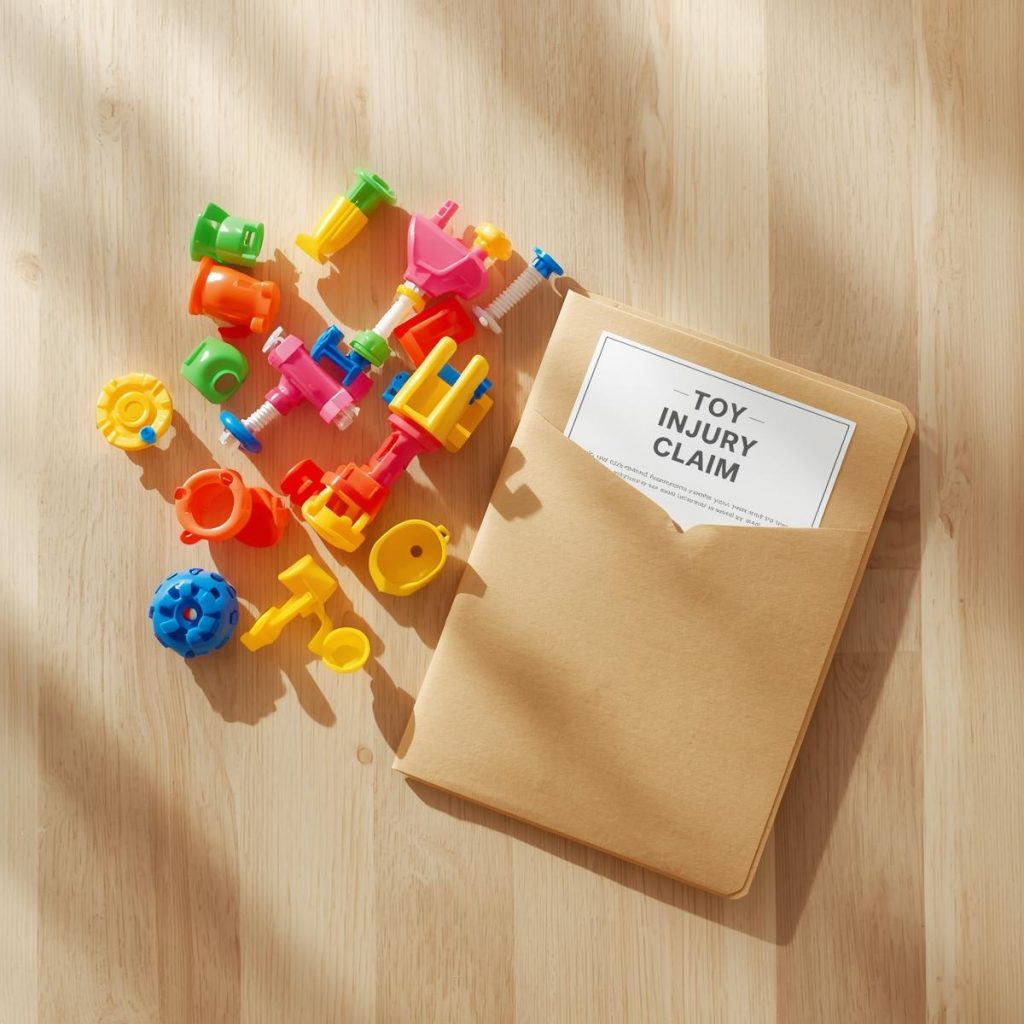
Young children explore the world by putting objects in their mouths. Infants and toddlers do not have the ability to recognize danger, remove obstructions, or call for help. Even brief airway blockage can lead to:
Because of these risks, toy safety regulations exist to limit small parts, strings, cords, and detachable components in children’s products. When toys violate these standards or fail during use, the consequences can be severe.
Toy choking hazards may include:
Even toys labeled for babies can pose risks if components detach over time or if quality control is lacking.
Choking injuries often happen during ordinary, expected use of a toy, such as:
Many incidents occur without misuse, meaning the toy was being used in a way that manufacturers should reasonably anticipate.
Injuries associated with toy choking hazards may include:
Even non-fatal choking incidents can require extensive medical evaluation and follow-up.
While every situation is unique, child toy choking injury claims often involve scenarios like these:
Example 1 – Pull-String Toy Incident
An infant pulls on a string attached to a toy. The string detaches and becomes lodged in the child’s throat, causing choking and requiring emergency care.
Example 2 – Small Part Detachment
A toy labeled for young children breaks apart during normal play. A small component enters the child’s mouth and obstructs breathing.
Example 3 – Teething Toy Failure
A teething toy softens with use and splits, releasing a piece that the child swallows or chokes on.
These incidents frequently happen quickly, leaving caregivers little time to respond.
Child toy choking injury cases are typically evaluated under product liability law, which focuses on whether a product was unreasonably dangerous when it left the manufacturer or seller.
Potential legal theories may include:
If the toy was designed with features that posed a foreseeable choking risk, such as strings or detachable small parts.
If certain toys were improperly assembled, allowing parts to detach.
If packaging failed to provide adequate choking hazard warnings or age-appropriate guidance.
If a manufacturer, distributor, or seller failed to exercise reasonable care in designing, testing, or selling the toy.
A toy does not need to be recalled for a claim to exist, though recalls can help establish that a hazard was recognized.
Toys are often labeled with age recommendations, but those labels do not automatically protect companies from liability. Courts may examine:
A toy marketed or sold in a way that encourages use by infants may face greater scrutiny.
Many choking-hazard toys are sold through online marketplaces such as Amazon and other e-commerce platforms. These sales channels can present challenges, including:
Parents may not realize a toy is dangerous until an injury occurs.
If your child experienced a choking incident involving a toy:
Preserving evidence can be critical in evaluating a potential claim.
If a child is injured due to a dangerous toy, families may be able to seek compensation for:
Claims involving children often focus on both immediate harm and long-term impact.
The Law Offices of Jason Turchin can represent families nationwide in defective product and child injury cases, including toy choking injury claims. The firm handles cases on a contingency fee basis, meaning there are no fees or costs unless money is recovered.
The firm may help by:
We aim to help families understand their rights during a difficult time.
No. Many claims involve products that were never formally recalled.
Non-fatal injuries may still support a legal claim.
Yes. Online purchases do not prevent injury claims.
Warnings must be adequate and effective. Labels alone may not prevent liability.
Time limits vary by state, so speaking with a lawyer promptly is important.
Some cases are individual; others may be coordinated depending on circumstances.
Claims may still be possible with medical records, photos, and purchase documentation.
If your child was injured or placed at risk by a dangerous or defective toy, you may have legal options worth exploring. The Law Offices of Jason Turchin can help review your situation and explain potential next steps.
📞 Call (800) 337-7755 or visit www.VictimAid.com for a free consultation.
There are no fees or costs unless money is recovered.
