
Millions of Dollars
Recovered for Our Clients.
Recovered for Our Clients.
Let Us Fight for the Money You Deserve!











A product liability case can begin in seconds. A pressure cooker lid opens while the contents are still under pressure. A lithium-ion battery catches fire while charging. A ladder collapses beneath someone. A coffee maker releases scalding water. A steamer sprays hot liquid or steam. A heated product becomes dangerously hot against the skin. A defective automotive component fails during a crash.
These are the types of product cases our attorneys focus on.
The Law Offices of Jason Turchin represents people who have suffered serious burns, scald injuries, fractures, traumatic injuries, permanent scarring, and other significant injuries that may have been caused by a defective or dangerous product. Our product liability lawyers have handled claims involving pressure cookers, consumer appliances, battery fires, collapsing products, automotive components, recalled products, and other allegedly defective products.
We are particularly interested in cases where the product itself can be preserved for inspection, the injury required meaningful medical treatment, and there is evidence that the product failed during reasonably foreseeable use.
If you or a family member suffered a serious injury involving a consumer product, call 800-337-7755 or chat with one of our live agents. We can review what happened and determine whether it is a type of product liability claim our firm may be able to investigate.



Product liability is an enormous area of law. Not every broken product creates a viable product liability case, and our firm does not attempt to handle every type of consumer complaint. We focus our practice on cases involving significant physical injuries and product failures that may support a claim against a manufacturer, distributor, retailer, or another company in the chain of distribution.
Some of the product liability cases we may investigate include:
A recall can be important evidence, but a product does not necessarily need to have been recalled for an injured consumer to potentially have a claim. Likewise, the existence of a recall does not automatically mean that every injury involving that product creates liability.
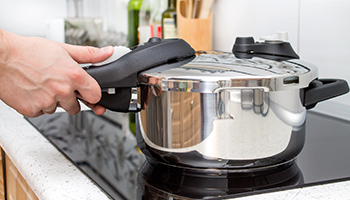
Pressure cooker cases have been an important part of our product liability practice. Electric pressure cookers are designed to cook food at elevated temperatures while pressure builds inside the pot. If a lid can be rotated, opened, or removed while significant pressure remains inside, extremely hot liquid, steam, and food can suddenly erupt toward the user.
Our pressure cooker attorneys have represented people burned by several brands and models of pressure cookers and multicookers. We have investigated allegations involving lid-locking systems, pressure release mechanisms, valves, safety features, instructions, warnings, and other components that may affect whether a cooker can be opened safely. Our firm has handled more pressure cooker lawsuits and claims than most lawyers in the US.
People looking for more information about these claims can visit our pressure cooker injury lawyers section. We also maintain information about specific products, including Instant Pot burn injury claims, Gourmia pressure cooker burns, and other pressure cooker cases.
Attorney Jason Turchin has also handled national mass tort litigation involving pressure cooker manufacturers and distributors. Additional information about this area of practice is available through our related pressure cooker product liability practice.
Burn cases are another major focus of our product liability practice. Serious burns can require emergency treatment, hospitalization, wound care, debridement, skin grafting, scar treatment, plastic surgery, physical therapy, and long-term medical monitoring. Even a relatively small burn can become significant when it affects the face, hands, feet, joints, or another sensitive area.
We can investigate burn injuries involving products such as:
Our website includes a dedicated section for Florida burn injury claims as well as information about garment steamer burn injuries, fire pit burn claims, and other product-related burns.
Lithium-ion batteries are found in countless consumer products, including cell phones, laptops, power banks, e-bikes, scooters, tools, heated clothing, and personal electronics. When a battery cell fails, the resulting incident can involve intense heat, smoke, fire, or an explosion.
A battery fire claim may require investigation into the battery cells, charging system, battery management system, manufacturing process, charger, product design, and warnings supplied with the product. Determining the source of the battery can also become important when the finished product was assembled or sold by a company different from the battery manufacturer.
Our attorneys investigate significant battery fire cases, including lithium-ion battery fire injuries, power tool battery explosions, and injuries involving consumer electronics and charging devices.
Some products fail without fire, heat, or an explosion. A ladder may fold unexpectedly. A step stool may collapse. A chair can separate from its base. Furniture can tip or break. When a product intended to support a person’s weight suddenly fails, the user may suffer fractures, head injuries, spinal injuries, torn ligaments, or other significant trauma.
These cases may involve allegations concerning hinges, locking mechanisms, fasteners, welds, materials, assembly instructions, stability, load capacity, or warnings.
Our firm investigates serious injuries involving step stool collapses, ladder injuries, and defective furniture.
Not every motor vehicle injury is caused solely by a driver’s conduct. Sometimes a component of the vehicle may contribute to an accident or make the resulting injuries substantially worse.
Automotive product cases can involve allegations concerning airbags, seat belts, seats, steering systems, tires, ignition systems, brakes, structural components, self-driving mode failures, or other vehicle systems. Our automotive product liability attorneys can investigate cases involving serious injury or death where a vehicle component appears to have malfunctioned.
Our practice has included airbag claims, including cases involving unexpected deployment, failure to deploy, inflator problems, or injuries caused by components released during deployment. We also investigate certain tire tread separation claims. Jason Turchin was one of the first lawyers in the US to file a lawsuit against Takata and Honda for the Takata airbag shrapnel cases. His work was even cited by Congress.
There is rarely one fact that determines whether a product liability case may be viable. Several factors can become important.
A significant injury. Product liability litigation can require engineers, product experts, testing, document discovery, depositions, and extensive investigation. Cases involving substantial medical treatment, permanent injury, serious burns, surgery, fractures, scarring, or death are generally more likely to justify that level of litigation.
The product can be preserved. The actual product involved in the incident may be one of the most important pieces of evidence. An engineer may need to inspect, photograph, test, scan, or disassemble it. If the product was returned, sometimes the customer could still have a claim because of spoliation if the store failed to preserve the product.
Evidence of a malfunction or defect. An unexpected lid opening, structural collapse, battery ignition, electrical failure, uncontrolled heating event, component fracture, or similar malfunction can provide an important starting point for investigation.
Similar incidents or recalls. Prior consumer complaints, recalls, lawsuits, warranty claims, safety reports, or other incidents can sometimes help establish whether a manufacturer knew about a potential issue.
A clear connection between the product and the injury. Medical records, photographs, witness statements, video, damaged clothing, product remnants, receipts, purchase records, and other evidence may help establish what happened.
If a product seriously injured you, one of the most important things you can do is preserve it.
Do not throw it away.
Do not return it to the retailer.
Do not mail it back to the manufacturer simply because the company offers a refund or replacement.
Do not repair, alter, clean, dismantle, or test it yourself.
If the product is dangerous, such as a damaged lithium-ion battery, safety considerations come first. Appropriate professionals may need to determine how it can be safely stored. Otherwise, preserving the product in substantially the same condition it was in after the incident can become critical.
Photographs can also be extremely helpful. Consider preserving photographs of the product, model and serial number, packaging, warnings, instructions, receipt, location where the incident happened, and visible injuries.
Product liability claims can involve several different legal theories depending on the facts and the state whose law applies. Potential claims may include strict product liability, negligence, failure to warn, breach of warranty, or other theories.
A defect may generally involve the product’s design, the way a particular unit was manufactured, or warnings and instructions associated with the product. The precise legal standard can vary considerably by jurisdiction and by the type of product involved.
Florida law also contains statutes that can affect product liability litigation. For example, Florida Statute § 768.1256 addresses certain presumptions concerning compliance or noncompliance with government safety standards.
Florida’s limitations statutes are also important. Under the current version of Florida Statute § 95.11, an action for injury to a person founded on the design, manufacture, distribution, or sale of personal property is generally listed within the two-year limitations category. Other claims arising from the same event may be governed by different time periods.
Because limitation periods, statutes of repose, exceptions, and choice-of-law questions can be complicated, an injured consumer should not assume a claim is timely based only on a general internet description. Contact our product liability attorneys to see if you may qualify for compensation.
No recall is necessarily required before a product liability claim can be investigated. A consumer can sometimes be among the first people to experience a particular failure.
On the other hand, a recall can provide useful information. Recall notices may identify the manufacturer, product model, dates of manufacture, hazard being investigated, reported incidents, or corrective action proposed by the company.
A recall itself does not automatically establish that a manufacturer is legally responsible for a particular person’s injuries. The facts surrounding the individual incident still matter.
Depending on the facts and applicable law, potential defendants could include a manufacturer, component manufacturer, importer, distributor, retailer, or another company involved in placing the product into the stream of commerce.
Modern product cases can become particularly complicated when a product was purchased through an online marketplace. The company whose name appears on an online listing may not necessarily be the company that designed or manufactured the item. Components may have been manufactured in several countries and assembled elsewhere.
Our firm has experience investigating claims involving products sold online, including claims involving Amazon. Consumers can learn more through our Amazon product injury lawyers section.
Product liability cases can require far more than submitting an insurance claim. They may involve preserving physical evidence, researching recalls and prior incidents, identifying companies within a distribution chain, reviewing technical documents, retaining engineers or other experts, and pursuing litigation against corporations and insurers.
Attorney Jason Turchin has more than two decades of legal experience and has represented consumers in serious product injury cases. His professional recognition includes:
Jason Turchin has also been featured by national media including CBS Evening News, CBS This Morning, CNN, The New York Times, The Wall Street Journal, USA Today, The Washington Post, Bloomberg News, and Rolling Stone.
A product liability claim generally involves an allegation that a product was defective or unreasonably dangerous and caused an injury. Depending on the jurisdiction and facts, a claim may involve the product’s design, manufacturing process, warnings, instructions, or another alleged failure.
Not necessarily in every case, but having the actual product can be extremely important. Product liability experts may need to inspect it to determine how or why it failed. If you still have the product, preserving it without alteration may significantly help an investigation. Sometimes cases can still be proven with circumstantial evidence.
If you suffered a serious injury, consider speaking with a product liability lawyer before returning the product. Once the product leaves your possession, obtaining or inspecting it later could become more difficult.
Potentially. A recall is not necessarily required for a product liability claim. The investigation may instead focus on the particular product, how it failed, whether similar incidents occurred, and whether the alleged failure caused the injury.
Possibly. Online product transactions can involve sellers, manufacturers, importers, distributors, fulfillment companies, and marketplaces. Which parties could potentially be responsible may depend on the product, transaction, jurisdiction, and applicable law.
Depending on the jurisdiction and facts, recoverable damages could potentially include past and future medical expenses, lost income, loss of future earning capacity, pain and suffering, disability, disfigurement, and other losses. A wrongful death claim may involve different categories of damages.
There is no reliable formula for valuing every product liability claim. Factors can include the severity and permanence of the injury, medical treatment, scarring, lost income, available evidence, applicable law, potential defendants, insurance or corporate resources, and the strength of evidence linking the product to the injury.
The deadline depends on the state, the legal theory, the type of injury, when the injury occurred or was discovered, and potentially the age of the product. Florida currently places certain personal injury actions based on the design, manufacture, distribution, or sale of personal property within a two-year limitations category, but different deadlines can apply to other claims. A statute of repose can also create a separate deadline based on a product’s age. Anyone considering a claim should have the applicable deadline evaluated based on the specific facts.
Our product liability practice is primarily focused on cases involving significant physical injuries or death. We generally look for cases involving meaningful medical treatment, serious burns, fractures, surgery, hospitalization, permanent scarring, disability, or other substantial injuries. We generally do not represent consumers whose claims involve only a broken product without any injury, a refund dispute, warranty issue, or minor property damage.
Our product liability cases are handled on a contingency fee basis. This generally means attorney fees and case costs are tied to whether there is a recovery. There are no fees or costs owed to us unless there is a recovery.
If a pressure cooker exploded, a battery caught fire, a ladder collapsed, an appliance released scalding liquid, a heated product caused burns, an automotive component failed, or another consumer product caused a serious injury, preserving the evidence and investigating the product early can be important.
The Law Offices of Jason Turchin can review serious product injury claims and determine whether our attorneys may be able to help. Call us at 800-337-7755 or chat with our live agents.
All cases are handled on a contingency fee basis, which means there are no fees or costs owed to us unless there is a recovery.
